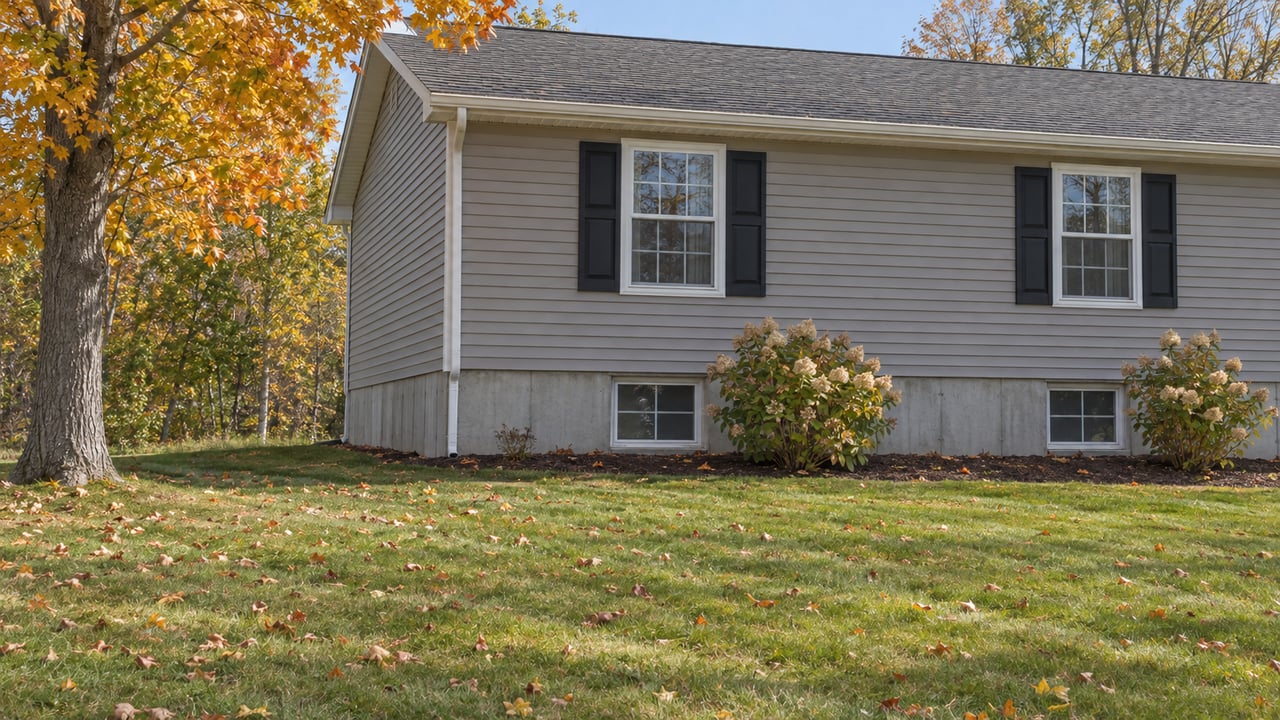
Cambridge's First Tax Bills Since the 2026 Reappraisal: Why the Rate Fell and Some Bills Still Didn't
October 22, 2026
October 22, 2026
Near the top of every Cambridge property tax bill dated August 5, 2026, there is a line in capital letters: "TAXES DUE IN-HAND MONDAY NOVEMBER 30, 2026 BY 7PM. POSTMARKS NOT ACCEPTED." Below it is a warning that an 8% penalty plus interest applies to late payment. The bill shows a single payment line dated 11/30/2026, so the full year is due in one installment.
This is the first bill Cambridge has issued since its first full reappraisal in twenty years. Owners may expect it to look like a tax cut, because the tax rate printed on it is far lower than last year's. Whether the bill itself went down is a separate question, and the answer depends on one number that is different for each property.
Cambridge's last full reappraisal was finished in 2006. In the 2026 values booklet, listers Cora Conly, Dale Copping and Suzanne Girouard told owners that before the reappraisal, assessed values "did not reflect the rapidly changing real estate market which began in 2021," and that "most recorded sales were significantly higher than the previous values." Vermont Appraisal Company began the work on July 1, 2024, with a target of tax year 2026.
The state had been tracking how far the town's assessments had drifted. In the Vermont Department of Taxes' 2025 equalization study, Cambridge's common level of appraisal, or CLA, was 55.52%. In plain terms, assessments averaged a little more than half of market value. The same study put the town's coefficient of dispersion at 20.36%. The state uses that figure to measure how unevenly assessments track market value from one property to the next. A COD that high means one home might have been assessed close to its sale value while a similar home down the road sat far below it.
That second number is the key to this year's bills. An outdated assessment roll is more than low. It is low by different amounts for different properties, so correcting it moves the tax burden around the town as well as raising values.
Vermont sets education tax rates using each town's CLA. Under a 2026 state law, a town's CLA is set at 100% in the year it completes a reappraisal. Cambridge's FY2026 education rates were based on a 62.03% CLA. Its FY2027 rates use 100%.
Here is how the rates on the town's own bills compare, per $100 of assessed value.
| Rate component | 2025 bill | 2026 bill |
|---|---|---|
| Homestead education | $1.7780 | $0.9887 |
| Nonhomestead education | $1.9867 | $1.1555 |
| Municipal share | $0.5893 | $0.3294 |
| Local agreement | $0.0044 | $0.0013 |
| Combined, homestead | $2.3717 | $1.3194 |
| Combined, nonhomestead | $2.5804 | $1.4862 |
The town's share fell for the same reason the state's did. The 2026 lodged grand list, dated July 22, 2026, carries $1,022,766,900 in real property value. When the base being taxed grows that much, the rate needed to raise a given budget gets smaller.
To compare one owner's two bills, divide the old combined rate by the new one. For a homestead, $2.3717 divided by $1.3194 comes to about 1.80. A homestead assessment that rose by less than about 80% produces a smaller bill than in 2025. One that rose by more produces a larger bill. For nonhomestead property, including second homes, the break-even point is about 74%.
Here is a hypothetical homestead assessed at $200,000 on the 2025 grand list:
| 2026 assessment | Change | Combined tax |
|---|---|---|
| $200,000 on the 2025 list | n/a | $4,743.40 at $2.3717 |
| $300,000 | +50% | $3,958.20 at $1.3194 |
| $360,000 | +80% | $4,749.84 at $1.3194 |
| $400,000 | +100% | $5,277.60 at $1.3194 |
The middle row lands within about $6 of where it started. A rate cut of almost half can leave a bill roughly the same as last year's, or higher, because the rate fell by about as much as the average property's value rose. Given the 20.36% dispersion, Cambridge's old assessments were uneven enough that many properties will land on either side of that line.
The arithmetic on a 2026 bill is simple. The assessment is divided by 100 to get the grand list value, which is then multiplied by each rate. On a nonhomestead property assessed at $250,000, that comes to $2,500 times $1.4862, or $3,715.50 for the year.
Annual taxes are one of the first numbers a buyer looks at, and in Cambridge this fall that number comes in two versions. A figure based on a 2025 bill combines a pre-reappraisal assessment with a pre-reappraisal rate. It does not reliably predict either the 2026 bill or the bill after that.
Both sides of a sale can work from the documents the town has already published:
For sellers, the booklet's percentage change is a simple way to set expectations. A seller whose assessment rose 50% can point to a lower 2026 bill. A seller whose assessment doubled has a larger bill to explain, even with the new rate.
The window to contest a 2026 value has closed. Change-of-appraisal notices went out in early June, and written grievances were due by 4:00 p.m. on June 16, 2026.
The table above has one more consequence for a buyer who closes this fall. According to the Vermont Department of Taxes Homestead Declaration FAQ, when a property changes hands after April 1, the new owner "waits until the following year to file the Homestead Declaration if the property qualifies as a homestead." The department's main Homestead Declaration page explains that the declaration applies to a Vermont resident's principal dwelling as of April 1, and that the filing deadline is April 15.
Property that has not been declared a homestead is billed at the nonhomestead rate. In Cambridge this year that rate is $1.4862 combined, compared with $1.3194 for a homestead, a gap of about 17 cents per $100. On a $400,000 assessment, that comes to $667.20 for the year. How that cost is handled between buyer and seller at closing is a matter for the purchase contract and the closing attorney. This post is general information and not legal or tax advice, so confirm your own situation with a Vermont attorney or tax professional.
Second-home owners may have heard about a new statewide tax class for vacation properties. The Department of Taxes' 2026 legislation summary says a nonhomestead-residential classification is scheduled for July 1, 2029. It depends on further legislative action and does not apply to the 2026–27 bills.
The reappraisal valued Smugglers' Notch Resort properties on their own schedules. The timeshare condo schedule totals $56,529,300 for 2025 and $97,164,400 for 2026, an increase of about 72%.
News & Citizen reported that 25 of the resort's 37 timeshare property owners appealed their 2026 values to the town's board of civil authority. A representative of the owners told the development review board that the listers had called the timeshares "very difficult to value." The paper also described the dispute over how to appraise these properties as a long-running one in Cambridge and around Vermont. Anyone buying a resort condo has two figures to check: the property's 2026 value and the separate condo schedule on the lister's reappraisal page.
Is the whole year due at once? Yes, according to the 2026 bill. It shows a single payment due in hand by 7 p.m. on Monday, November 30, 2026. Postmarks are not accepted, and an 8% penalty plus interest applies after that. The town's payment page gives the same deadline.
Did everyone's taxes go down? No. The combined rate fell by about 44%, but each bill depends on how much that property's own assessment rose. For a homestead, the break-even point is about 80%.
Does the 2026 bill include village taxes? The town's online payment system cannot be used for village taxes, so village taxes are handled separately from the town bill.
If you are thinking about selling in Cambridge or Jeffersonville and want to see where your property falls relative to the 80% line before you list, Jill Richardson can go through your 2025 and 2026 assessments with you and help you present the new tax figure clearly to buyers. Request a free consultation and home valuation.
Stay up to date on the latest real estate trends.

Contact Jill today to learn more about her unique approach to real estate and how she can help you get the results you deserve.
44 Main St VT-108 Jeffersonville, VT 05464